
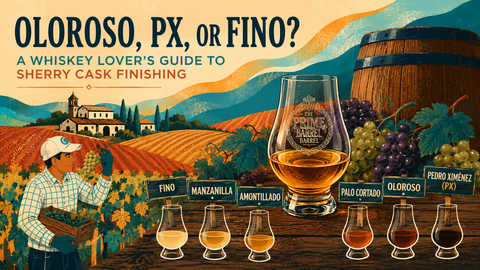
Oloroso, PX, or Fino? A Whiskey Lover's Guide to Sherry Cask Finishing
If you've ever picked up a bottle and seen "sherry cask finished" on the label and felt a little thrill — you're not alone. But here's the thing most tasting notes skip right past: not all sherry casks are created equal. A whiskey finished in Oloroso butts tastes nothing like one finished in Pedro Ximénez, and knowing the difference will change how you shop, taste, and talk about whiskey forever.
Let's break down the sherry styles that matter most in whiskey production, and what each one actually does to the spirit in your glass.
Why Sherry Casks in the First Place?
Before we get into styles, a quick bit of history: Scotch distilleries didn't start using ex-sherry casks for flavor — they started using them because they were cheap and plentiful. Spanish bodegas shipped sherry to the UK in oak butts throughout the 19th and 20th centuries, and once emptied, those casks were sitting right there, ready for reuse. Distillers noticed the wine-soaked oak added color and character, and a signature style of Scotch was born.
Today it's a deliberate craft choice. Casks are seasoned specifically for the whiskey industry, sometimes for as little as 6-24 months, purely to transfer flavor rather than to actually age commercial sherry.
The Sherry Styles That Shape Your Whiskey

Oloroso — The Classic "Sherry Bomb"
Oloroso is oxidatively aged, meaning it spends its life exposed to air rather than under a protective yeast layer (more on that below). This produces a dark, nutty, full-bodied wine with notes of walnut, leather, and dried fig.
Impact on whiskey: This is the cask most people picture when they hear "sherry cask." Oloroso casks impart deep mahogany color, dried fruit (raisin, date, fig), Christmas cake spice, walnut, and a rich, chewy mouthfeel. Think Macallan Sherry Oak, GlenDronach, or Aberlour A'bunadh — these are the whiskies that built Oloroso's reputation as the gold standard for rich, robust Scotch.

Pedro Ximénez (PX) — Liquid Dessert
PX is made from sun-dried grapes, concentrating sugars to create an intensely sweet, almost syrupy fortified wine — think molasses, raisin, and espresso.
Impact on whiskey: PX casks bring serious sweetness and viscosity. Expect notes of molasses, dark chocolate, stewed prunes, and toffee, often with a syrupy texture that coats the palate. Because PX is so concentrated, distillers frequently use it for a shorter finishing period or blend it with other cask types — too much PX and a whiskey can tip from "rich" into "cloying." It's a favorite for limited releases where a bold, dessert-like statement is the goal.

Fino — The Delicate Outlier
Fino is aged under a layer of flor (a natural yeast film) that protects the wine from oxygen, keeping it pale, dry, and almost saline, with notes of green apple and almond.
Impact on whiskey: Fino casks are the quiet minimalists of the sherry world. Rather than piling on dried fruit and spice, they contribute a light nuttiness, subtle brine, and a crisp, dry edge. Fino-finished whiskies tend to stay closer to the base spirit's original character, with just a whisper of added complexity — great for distilleries that want sherry influence without overwhelming a delicate new-make spirit.

Manzanilla — Fino's Coastal Cousin
Manzanilla is made the same way as Fino — aged under flor — but only in the coastal town of Sanlúcar de Barrameda, where the sea air keeps the flor thicker and more active. The result is even lighter and drier than Fino, with a distinct saline, chamomile-like note (manzanilla is even Spanish for "chamomile").
Impact on whiskey: Rare but striking in whiskey production, Manzanilla casks bring a briny, mineral edge alongside light florals and a bone-dry finish — even more delicate than Fino. Because it's so subtle, it's typically reserved for whiskies where the distillery wants to add texture and a whisper of maritime character without masking the base spirit. If you taste a whiskey with an unexpected sea-salt or chamomile note, there's a good chance Manzanilla wood is behind it.

Amontillado — The In-Betweener
Amontillado starts life aging under flor like a Fino, then the flor dies off and it finishes aging oxidatively like an Oloroso. The result is a hybrid: nutty and dry, but with more depth than a straight Fino.
Impact on whiskey: Casks impart toasted almond, hazelnut, and a dry, savory edge alongside modest dried-fruit sweetness. It's a less common finish, but when you see it, expect a whiskey that splits the difference — more complexity than Fino, more restraint than Oloroso.

Palo Cortado — The Rare Wildcard
Considered by many sherry producers to be the most enigmatic style, Palo Cortado starts down the Fino path before unexpectedly losing its flor and shifting into oxidative aging — resulting in a wine with Amontillado's nose and Oloroso's body.
Impact on whiskey: Rare in whiskey production, Palo Cortado casks bring a compelling mix of nutty dryness and rich, dried-fruit depth. If you spot a Palo Cortado finish, it's worth grabbing — distilleries don't use it often, and it tends to signal a special or limited release.
Cream Sherry — The Commercial Blend
Cream sherry is a blend, typically Oloroso mixed with sweet PX or Moscatel, built for approachability and consistent sweetness.
Impact on whiskey: Casks bring balanced sweetness and dried fruit without PX's intensity — a middle-ground flavor profile. It's common in lower-cost "sherry finished" releases where consistency matters more than terroir-driven nuance.
The Dry-to-Sweet Spectrum
One of the most common questions we get: which sherry is sweetest, and which is driest? Here's the lineup, driest to sweetest:
- Manzanilla — bone-dry, briny, chamomile-like
- Fino — dry, light nuttiness, crisp
- Amontillado — dry to off-dry, nutty, more depth than Fino
- Palo Cortado — dry but richer, nutty with dried-fruit depth
- Oloroso — traditionally dry, though richness from oxidative aging often reads as sweetness
- Cream — medium-sweet, a blend (usually Oloroso plus PX or Moscatel)
- Pedro Ximénez (PX) — the sweetest, syrupy and concentrated
Here's the nuance that trips most people up: Oloroso is naturally a dry wine — it has no residual sugar from the grape itself. Its richness comes entirely from oxidative aging, not sugar. What causes confusion is that commercial "sweet Oloroso" also exists, blended with PX or Moscatel for the market. So on a strict technical dryness scale, Oloroso actually sits earlier than most drinkers assume — it just tastes rich thanks to nutty, dried-fruit character rather than actual sweetness.
This matters for whiskey drinkers too: a whiskey finished in true dry Oloroso casks will show that same rich-but-not-sugary profile, while one finished in a sweetened commercial Oloroso, PX, or Cream cask will bring noticeably more sugar-forward character to the glass.
Beyond Scotch: Sherry Casks in Other Whiskeys
Sherry cask influence isn't a Scotch-exclusive trick:
- Irish whiskey — Brands like Redbreast and The Irish Sherry-cask releases lean on Oloroso to add richness to the naturally fruity pot-still spirit.
- Bourbon — Since bourbon must be aged in new charred oak, sherry casks come in as a finishing step after primary maturation, layering dried fruit and spice over vanilla and caramel. Angel's Envy popularized this approach.
- Japanese whisky — Distilleries like Yamazaki have used sherry casks (including casks from their own commissioned Spanish coopers) as a signature part of their flavor profile for decades.
- American single malt — A growing category (hello, ASW Distillery and Westward) is borrowing heavily from Scotch tradition, using ex-sherry casks to build complexity in a young, fast-evolving spirit.
What to Look For on the Label
A few phrases worth knowing when you're shopping:
- "Sherry cask matured" — the whiskey spent its entire maturation in ex-sherry wood, generally producing deeper, more integrated sherry character.
- "Sherry cask finished" — the whiskey was aged primarily in another cask type (often ex-bourbon), then moved to sherry wood for a shorter finishing period, layering flavor on top of an existing base.
- "First-fill" vs. "refill" — a first-fill sherry cask (used only once before for sherry) delivers much more intense flavor and color than a refill cask, which has already given up much of its character to a previous whiskey fill.
The Takeaway
Next time you're comparing two "sherry cask" bottles, don't stop at the label. Ask which style of sherry seasoned the wood. An Oloroso cask and a PX cask can turn the same base spirit into two completely different drinking experiences — one built on dried fruit and leather, the other on molasses and dessert-like sweetness. Understanding the difference doesn't just make you a better taster — it makes you a smarter shopper.
Curious which sherry-finished whiskies we're currently pouring? Explore our current single barrel selections and taste the difference for yourself.